
For swim performance and fashion brands expanding into shape-enhancing product lines, tummy-control swimwear presents a distinct engineering challenge. Unlike standard fashion swimwear, functional control garments sit at the intersection of body mapping, garment pressure, and durable textile science.
Achieving effective midsection control is not about squeezing the body into a smaller size or relying on decorative styling tricks. True tummy control requires structured support—distributing tissue comfortably while maintaining freedom of movement, structural breathability, and reliable shape retention in aquatic environments.
Here is a practical guide to the technical decisions required to design, pattern, and produce high-performance tummy-control swimwear that delivers consistent fit and long-lasting support.
1. Defining Support Levels and Anatomic Target Areas
Effective tummy-control design begins by mapping the target zones and determining the structural pressure required for each region. Applying uniform high compression across the entire torso causes discomfort, edge-rolling, and unintended tissue displacement.
Targeted Support Zones
- Lower Abdomen (Sub-umbilical Zone): This area generally requires the firmest support. Internal panels should focus stability low on the pelvis to offer lift and control without compressing the ribcage or diaphragm.
- Upper Abdomen: High-pressure layers in the upper abdominal region restrict breathing and cause the top edge of the swimsuit to dig into the skin. Support here should transition to moderate stretch.
- Lateral Flanks and Waist: Side panels need graduated compression to direct support inward toward the core while maintaining lateral mobility.
Defining Pressure Metrics
Rather than using vague consumer descriptions like “slimming” or “sculpting,” technical specifications should categorize support by compression intensity:
| Support Level | Primary Application | Internal Lining Specification | Target Compression Range |
| Light Support | All-day comfort / Active swimming | Medium-weight Power Mesh (~140–160 gsm) | Minimal rest tension; light shaping |
| Moderate Control | Everyday shape enhancement | Heavyweight Power Mesh (~180–210 gsm) | Controlled stretch; stable recovery |
| Firm Control | High-sculpting core support | Dual-layer Mesh or Double-knit Liner (>220 gsm) | Firm containment; targeted paneling |
2. Fabric Selection and Interior Support Layering
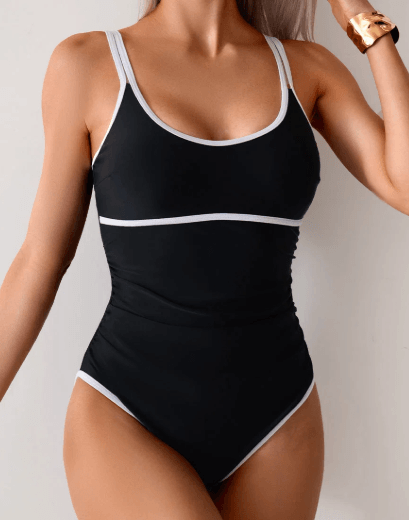
Outer swim fabric alone cannot deliver structural control. Tummy-control swimwear relies on a two-part material system: a high-stretch, chlorine-resistant outer shell and a specialized structural interior lining.
Outer Shell Materials
The exterior fabric provides aesthetic coverage, UV protection, and chemical resistance. High-gauge Nylon/Spandex or recycled Polyester/Spandex blends with high elastane content (typically 18% to 28%) are standard. To prevent premature breakdown from chlorine and sunscreen oils, use extra-life elastane (such as Creora® Highclo or Lycra® Xtra Life).
Interior Power Mesh and Liners
The real work happens inside the garment. Power mesh fabrics differ significantly in stretch modulus, weight, and recovery:
- Stretch Modulus: High-modulus fabrics resist extension, providing firm support without requiring excessive thickness.
- Warp vs. Weft Stretch: The direction of highest resistance must align with the body’s primary tension vectors. In most tummy-control panels, the highest modulus runs horizontally across the core.
- Breathability and Water Retention: Interior mesh must allow rapid water drainage and air circulation to prevent heat build-up and heavy water weight when wet.
3. Pattern Development and Negative Ease
Creating a pattern for control swimwear requires precise control over negative ease—sizing the pattern smaller than body measurements so the garment stretches to fit and exert controlled pressure.
Variable Negative Ease
Because different fabrics and interior liners stretch at different rates, there is no single negative ease percentage that applies universally.
- Standard Swim Outer: Typically cut with 10% to 15% negative ease for a smooth fit.
- Control Panels: May require 18% to 25% negative ease, depending on the stretch modulus of the power mesh.
If negative ease is too high, the fabric hits its stretch limit, leading to sheer spots, seam strain, and tissue spillover at the leg openings and armholes.
Ergonomic Paneling
Avoid using full-front single-piece liners for high-compression designs. Instead, break the front construction into targeted panels:
- V-Shaped Core Panels: Anchor control along the lower abdomen and pelvic structure while releasing tension toward the hips.
- Curved Side-Seam Lines: Drawing side seams slightly forward creates an optical and structural contour that supports the core without requiring extreme compression.
4. Seams, Hardware, and Structural Design Details
Structural interior fabrics need supporting exterior construction techniques to distribute strain evenly across the garment.
Seam Construction and Thread Selection
Standard flat seams can snap under high tension. Control garments require seams engineered for high extension and recovery:
- Flatlock Stitching (ISO 607): Ideal for joining interior control panels directly to side seams, creating a flat profile that minimizes skin irritation.
- 4-Thread Overlock with Safety Stitch: Ensures high tensile strength along primary load-bearing seams.
- High-Elastomer Threads: Using elastic threads (such as textured nylon or poly-covered elastomeric threads) prevents seam pop during donning and doffing.
Edge Finishing and Stabilizing
The top edges, leg openings, and under-bust bands bear high pull forces in control garments:
- Siliconized or Encased Elastic: Keeps leg openings from riding up under tension without cutting into the thighs.
- Under-Bust Anchoring: A firm tummy panel needs a stable anchor above it. A wide, soft elastic band under the bust prevents the front panel from dragging the neckline down.
Functional Drape and Shirring
While gathers, pleating, and dark color blocking do not provide structural support on their own, they serve a functional purpose when layered over a structured liner. Shirring over a firm power-mesh core disguises surface tension lines, allowing the inner construction to work without creating a tight, smooth exterior appearance.
5. Fit Testing and Size Consistency Protocol
Standard static dress forms cannot accurately predict how a compression garment behaves on a living body. Fit validation for tummy-control swimwear requires dynamic and submerged testing.
Dynamic Fit Testing
Test garments on live fit models across the full motion spectrum:
- Sitting and Bending: Ensures the waistband and top edges do not roll down or dig into the ribcage.
- Donning and Doffing: Confirms that leg openings and torso seams stretch sufficiently for the wearer to put the garment on without tearing interior mesh.
- Edge Pressure Checks: Inspects leg openings and armholes for unintended tissue bulging.
Wet-State Testing
Synthetic fabrics—especially those with high elastane content—behave differently when wet.
- Evaluate modulus drop when saturated in chlorinated and salt water.
- Verify that interior support panels retain structural recovery when wet and do not sag or trap excessive water.
Grade Rules for Compression
Grading control swimwear requires careful attention. As garment dimensions increase across larger sizes, total fabric surface area grows. Applying identical grade rules across all sizes can result in excessive pressure on larger body types or insufficient support on smaller frames. Adjust negative ease dynamically across the size run to maintain consistent support levels from XS to 3XL.
6. Production and Quality Control Standards
Translating a technical design into mass production requires strict quality control over raw materials and assembly workflows.
Material Consistency Inspections
Power mesh and structural linings vary between dye lots. Test incoming fabric rolls for stretch percentage and recovery modulus before cutting. A 5% shift in fabric modulus can alter the finished garment’s fit profile.
Tension-Free Spreading and Cutting
Elastomeric fabrics deform under pull tension during spreading. Allow bulk fabric to relax tension-free on the cutting table for at least 24 hours prior to cutting. Cutting tensioned fabric leads to undersized panels once pieces relax.
Conclusion
Designing effective tummy-control swimwear is a precise balance of material selection, panel engineering, and manufacturing control. By focusing on targeted support zones, accurate interior layering, calibrated negative ease, and rigorous wear testing, brands can produce control swimwear that offers functional support, long-term durability, and a consistent fit across every size.