
A small ring, slider or clasp can completely change the appearance of a swimsuit. It can make a simple bikini feel more polished, improve adjustability or turn an ordinary design into something recognizable.
But swimwear hardware is not purely decorative.
Every component must work with stretch fabric, elastic tension and repeated exposure to water. Hardware that is too heavy may pull the garment out of shape. A slider that does not match the strap may slip, while a poorly finished ring can damage the fabric.
The right hardware needs to balance appearance, function, comfort and durability.
What Counts as Swimwear Hardware?
Swimwear hardware includes the metal, plastic or resin components attached to a bikini, one-piece swimsuit or cover-up.
Common examples include:
- Rings and connectors
- Strap sliders
- Back clasps and hooks
- Decorative buckles
- G-hooks
- Cord ends and stoppers
- Eyelets and grommets
- Chains
- Logo plates and metal tags
Some components have a practical purpose. Others are mainly used to create a visual detail or reinforce the identity of a collection.
Many pieces do both.
Start With the Function
Before choosing the color or shape, determine what the hardware needs to do.
A slider must hold the strap at the selected length. A back clasp must remain securely closed during movement. A decorative ring needs to connect fabric panels without creating pressure against the body.
Logo plates usually carry less tension, but they still need to stay flat and avoid catching on other garments.
It helps to divide hardware into three groups.
Functional Hardware
Functional components affect fit, adjustment or closure. These include sliders, hooks, clasps and some rings.
Their strength and dimensions must match the amount of tension placed on the garment.
Structural Hardware
Structural pieces connect two or more parts of a swimsuit. Large rings used at the front of a bikini or at the sides of a one-piece are common examples.
These components become part of the swimsuit pattern. Changing their size can change the fit of the garment.
Decorative Hardware
Decorative pieces include logo plates, charms and non-functional buckles. They may not carry much tension, but their weight, placement and surface finish still matter.
A decorative component should add value without making the swimsuit uncomfortable.
Common Types of Swimwear Hardware
Rings
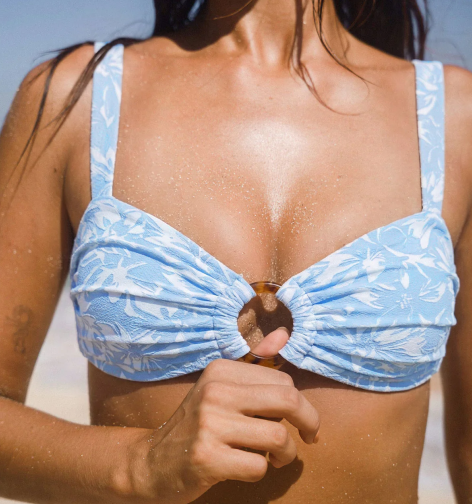
O-rings are widely used to connect straps, cups and bikini-bottom sides. Their rounded shape distributes tension relatively evenly and works with many swimwear silhouettes.
D-rings create a more directional connection. They can help keep a strap aligned, but their straight edge must match the way the strap enters the component.
Irregular and sculptural rings create a stronger visual statement. However, unusual shapes require more careful testing because tension may concentrate around corners or narrow sections.
Sliders
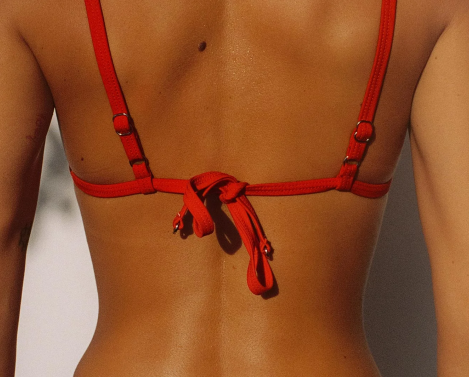
Sliders make shoulder, halter or body straps adjustable.
The internal width of the slider must match the finished strap width. If the opening is too wide, the strap may gradually loosen. If it is too narrow, the fabric can gather, twist or become difficult to adjust.
The thickness of the finished strap is also important. A strap usually contains fabric and elastic, making it thicker than the raw elastic measurement shown in the tech pack.
Clasps and Hooks
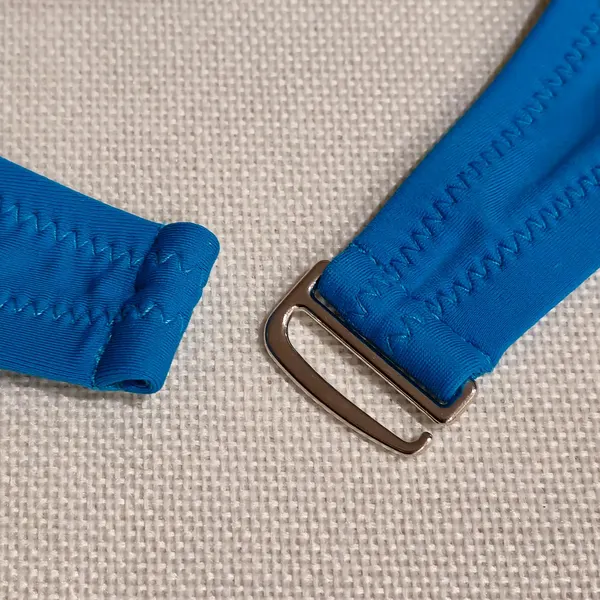
Clasps are commonly used at the back of bikini tops and structured one-piece swimsuits. They create a cleaner appearance than a tie closure and make the garment easier to put on.
The clasp should remain secure when the underbust band stretches. It should also be easy to operate without opening accidentally during swimming.
G-hooks offer a minimal appearance, while locking clasps can feel more secure. The choice depends on the band construction and the amount of tension.
Buckles
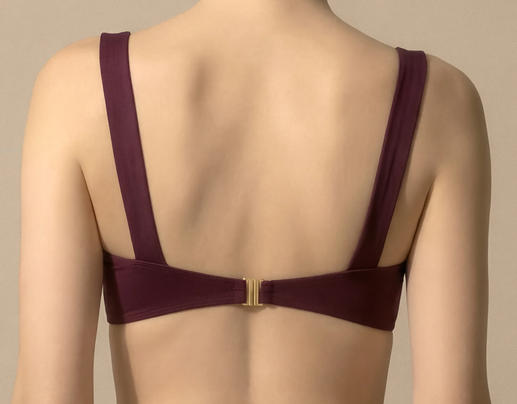
Buckles can be functional, decorative or both.
A front buckle can become the main design feature of a bikini top. Side buckles can create adjustable details on bikini bottoms, while larger buckles are sometimes used on swim belts or cover-ups.
Large buckles need to be lightweight. A heavy buckle may cause the fabric to sag or rotate when wet.
Logo Plates
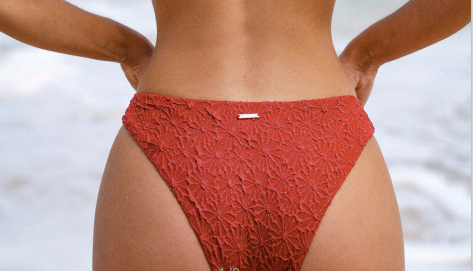
Logo plates add visible branding without relying on a printed or embroidered logo.
They may be attached to the center back, hip, cup edge or strap. The placement should feel intentional and should not create pressure when the wearer sits or lies down.
A logo plate should be small enough to remain comfortable but large enough for the logo to stay recognizable.
Choose a Suitable Material
Swimwear hardware can be made from stainless steel, brass, zinc alloy, aluminum, coated plastic or resin.
Each material has different advantages, and quality can vary significantly within the same material category.
Stainless Steel
Stainless steel can provide strength and a clean polished appearance. Depending on the grade and finish, it may offer good resistance to corrosion.
However, the term “stainless steel” does not guarantee that every component will perform equally in saltwater or chlorinated water. The exact material grade and coating still need to be confirmed.
Brass
Brass is often selected for premium metal hardware because it can be shaped, polished and plated in different finishes.
It is generally heavier than plastic hardware, so the component size and garment position should be considered carefully.
Zinc Alloy
Zinc alloy is frequently used for custom shapes and logo hardware. It allows detailed molding and a wide range of plated finishes.
Its water resistance depends heavily on the plating quality and protective coating. Low-quality finishes may discolor or wear unevenly.
Plastic and Resin
Plastic hardware is lightweight and does not create the same cold metal feeling against the skin.
It works well for sporty swimwear, active styles and lightweight bikinis. It can also be produced in colors that match or contrast with the fabric.
Plastic components still need to be tested for strength, heat resistance and color stability.
Check the Surface Finish
Metal color is only one part of the finish.
Gold, silver, rose gold, gunmetal and matte black can look different depending on the polishing, plating and protective coating. Components ordered from different suppliers may not match, even when they use the same color name.
If a swimsuit uses rings, sliders and a logo plate, compare all the components together under natural light.
Pay attention to:
- Color consistency
- Surface smoothness
- Plating coverage
- Visible scratches
- Sharp edges
- Welding marks
- Color transfer onto fabric
A small difference in metal tone can make a finished swimsuit look inconsistent.
Match Hardware to the Strap
The hardware size should be based on the finished strap, not only the raw elastic.
For example, a 12 mm elastic may produce a wider finished strap after it is wrapped in swimwear fabric. Seam allowance and fabric thickness can also affect how the strap passes through a slider.
Before bulk production, assemble the actual fabric, elastic and hardware together.
The strap should move through the slider during adjustment but stay in place under normal tension. It should not curl, fold or create excessive bulk around the hardware.
The same principle applies to rings and hooks. The strap should sit naturally inside the component without sliding to one side.
Consider Hardware Weight
Hardware that looks attractive on a sample board may feel very different when attached to stretch fabric.
Large metal rings can pull down lightweight bikini cups. Heavy logo plates may cause a bikini bottom waistband to turn outward. Decorative chains can stretch the fabric or become uncomfortable when wet.
The lighter and more minimal the swimsuit, the more noticeable the hardware weight becomes.
If the design requires a large statement component, consider:
- A hollow metal construction
- Lightweight alloy
- Resin or coated plastic
- A smaller component
- Reinforced fabric around the attachment point
The garment should support the hardware without losing its shape.
Look for Smooth Edges
Hardware sits close to the skin and often moves against stretch fabric.
Edges should be rounded and smooth. Rough joins, burrs or sharp corners can damage the fabric, cut elastic fibers or irritate the wearer.
Pay particular attention to welded rings and the internal edges of sliders. A component may look smooth from the front but still have a rough area where the strap passes through it.
Run a piece of the actual swimwear fabric through the component several times. If the hardware catches the fabric or creates visible abrasion, it should not be approved.
Think About Placement
The same piece of hardware can feel comfortable in one position and uncomfortable in another.
A ring at the center front may work well because it sits between the cups. The same ring placed directly on the hip can press against the body when the wearer lies down.
Logo plates attached at the center back may contact chairs and poolside surfaces. Metal pieces near the underarm can rub during swimming.
During fitting, check the hardware while the wearer:
- Raises and lowers the arms
- Bends and twists
- Sits and lies down
- Walks and swims
- Pulls the garment on and off
Hardware placement should be evaluated on the body, not only on a flat sample.
Choose Hardware for the Swimwear Style
Different silhouettes create different technical requirements.
Triangle Bikinis
Small rings and sliders work well with adjustable triangle tops. The components should remain lightweight so they do not pull on the narrow straps.
Bandeau Tops
Back clasps need to stay secure because the top may not have permanent shoulder straps. The underbust band and closure must work together to control tension.
Underwire Swimwear
Rings and sliders should match the more structured appearance of the cups. Back clasps must be strong enough for the underbust band without feeling bulky.
Cut-Out One-Pieces
Large rings and connectors can become part of the main construction. Their dimensions need to be included in the pattern because they affect the length and position of the fabric panels.
Bikini Bottoms
Side rings and buckles should be smooth, lightweight and positioned away from sensitive pressure points. The connected fabric may need reinforcement to prevent stretching.
Active Swimwear
Plastic or low-profile hardware is often more practical. Decorative metal pieces can add weight or create pressure during repeated movement.
Developing Custom Logo Hardware
Custom logo plates can make a collection more recognizable, but they require more preparation than standard hardware.
The supplier may need a vector logo, dimensions, preferred finish and attachment method. Complex logos may lose definition when reduced to a very small size.
Before opening a custom mold, consider:
- Minimum readable logo size
- Plate thickness and weight
- Flat or curved construction
- Rounded edges
- Attachment holes or prongs
- Front and back surface finish
- Plating color
- Placement on the swimsuit
The back of the logo plate is just as important as the front. Rough prongs or exposed attachments can damage the lining or irritate the skin.
Custom hardware may also involve mold charges, higher minimum quantities and longer lead times. It should be confirmed early in the development process.
Final Thoughts
The best swimwear hardware is not simply the most decorative option. It should match the strap width, fabric weight, garment tension and intended use of the swimsuit.
Rings and sliders need to adjust smoothly. Clasps must stay secure. Decorative buckles should remain comfortable, while logo plates need to represent the collection without adding unnecessary weight.
Selecting these components early and testing them on the finished sample can prevent slipping straps, damaged fabric and inconsistent metal finishes during production.
If you are developing a custom swimwear collection, we can help source rings, sliders, clasps, buckles and logo hardware that match your designs. Contact us to discuss your styles, preferred finishes and sample requirements.