
Small construction details can have a major effect on swimwear design, and contrast binding is a clear example.
Although binding covers only the edges of a swimsuit, it can redefine the neckline, emphasize the leg opening and make a simple silhouette more recognizable. The same pattern can look sporty, retro, minimal or graphic simply by changing the binding color, width and placement.
However, the final result depends on more than color. Fabric thickness, stretch recovery, elastic tension and sewing quality all affect how the binding looks and performs on the finished garment.
What Is Contrast Binding?
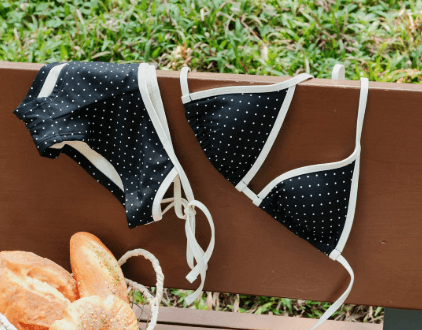
Contrast binding is a strip of fabric used to finish the edge of a swimsuit in a color that differs from the main body fabric. It may be applied around the neckline, armholes, shoulder straps, waistband, back opening or leg openings.
Self-fabric binding usually blends into the garment. Contrast binding does the opposite: it makes the edge visible and turns the construction into part of the design.
It should not be confused with piping or color blocking. Piping is normally inserted into a seam, while color blocking uses larger fabric panels. Binding wraps around a garment edge and provides both a visual detail and a functional finish.
How Binding Defines the Silhouette
A solid-color swimsuit usually has a smooth, continuous appearance. Once contrast binding is added, the outline becomes clearer and the eye naturally follows the neckline, straps, waist and leg openings.
This effect is particularly useful for simple silhouettes. A triangle bikini, square-neck swimsuit or sports-inspired top may not need prints, ruching or metal hardware when the binding already creates a strong visual feature.
The level of contrast determines how noticeable that feature becomes. Black binding around a bright body color creates a bold, athletic look, while white or cream binding against navy, red or green often produces a more retro result.
Tonal combinations create a softer effect. A pale blue body with darker blue binding still adds definition, but it does not make the garment look heavily outlined. The right contrast level therefore depends on whether the collection should feel sporty, nostalgic, minimal or graphic.
Binding Can Change Visual Proportion
Contrast binding does not physically change the swimsuit pattern, but it can influence how the shape is perceived.
A visible line around a V-neckline emphasizes its downward direction and can make the front appear longer. Binding around a square neckline strengthens the horizontal and vertical lines, making the shape feel more structured.
The same principle applies to bikini bottoms. Binding around a high-cut leg opening draws attention to the upward leg line, while a contrasting waistband emphasizes the waist position. On a low-rise bottom, a strong horizontal edge may make the hip area appear wider.
Placement therefore matters as much as color. The binding should support the pattern lines rather than divide the garment in an unflattering way or make one section appear heavier than intended.
One Silhouette, Different Style Directions
Contrast binding allows a brand to adapt an approved silhouette into several visual directions without developing a completely new pattern.
| Style Direction | Typical Color Approach | Suitable Designs |
|---|---|---|
| Sporty | Dark binding with bright or saturated body colors | Crop bikini tops, racerbacks, surf styles and active swimwear |
| Retro | White, cream or pastel binding with navy, red, brown or green | Square necklines, wide straps and high-waisted bottoms |
| Minimal | Tonal or low-contrast color combinations | Clean bikinis and simple one-piece swimsuits |
| Graphic | Strong contrasting colors with clearly outlined edges | Simple silhouettes with limited additional decoration |
Colorways should still be sampled individually. Dark, light and neon fabrics may behave differently during stretching, sewing and wet testing, even when they use the same base fabric construction.
Binding Width Also Changes the Design
Color is not the only factor that controls the visual effect. Binding width determines how much attention the edge receives.
A wider binding creates a stronger border and may become one of the main design elements. It often works well on sports-inspired tops, high-waisted bottoms and simple one-piece swimsuits.
A narrower binding looks more delicate and is better suited to minimal bikinis or designs where the contrast should remain subtle. However, narrow binding often requires greater sewing control, especially when working with lightweight or highly elastic fabrics.
Fabric thickness must also be considered. A bulky fabric folded into a narrow binding may create an uneven or rounded edge, while a thin fabric used for very wide binding may lack sufficient stability.
The finished width should also be reviewed across the size range. A binding that looks balanced on the sample size may appear too narrow on a larger size or too dominant on a smaller one.
Fabric and Construction Affect the Final Result
A contrast binding color should not be approved only from an unstretched fabric swatch. Swimwear fabrics change when stretched across the body, and some colors may become lighter, less opaque or slightly different in tone. Textured fabrics may also flatten, which can alter the relationship between the body fabric and the binding.
For this reason, the binding should be evaluated on a finished and fitted sample.
Stretch and Recovery
The body fabric and binding fabric should have compatible stretch and recovery.
If the binding is less elastic than the main fabric, it may pull too tightly around the neckline or leg opening. If it stretches too easily or has poor recovery, the edge may wave, roll outward or lose its shape after wear.
Even when the same base fabric is used, differences in dyeing and finishing may slightly affect hand feel, stretch or recovery. Each color combination should therefore be checked rather than assumed to perform identically.
Elastic Tension
Many binding constructions contain elastic inside the folded edge. The elastic helps the opening remain stable, but the tension must be controlled carefully.
Excessive tension can cause gathering, digging or distortion. Insufficient tension may leave the opening loose and unstable. Different areas of the garment may also require different tension settings because a neckline, strap and leg opening do not behave in the same way.
The correct tension should be established during sample development and recorded clearly for bulk production.
Colorfastness
Dark binding placed next to a white or pale body fabric requires careful testing. Wet conditions, chlorine, salt water, washing and prolonged contact during storage can increase the risk of color bleeding or migration.
This is particularly important when the swimsuit includes white lining or combines very dark and very light colors. A visually attractive combination should not be approved until its colorfastness and migration performance have been confirmed.
When Contrast Binding Works Best
Contrast binding works best on designs with clean, recognizable edges, where it can frame the silhouette without competing with other details.
It also works well on rash guards, children’s swimwear and athletic swim pieces because the outlined edges naturally support a sporty direction.
For printed swimwear, the binding can repeat one color from the print. This creates a connection between the edge finish and the main pattern without introducing an unrelated color.
However, not every swimsuit benefits from strong contrast binding. A style that already includes complex prints, ruching, cut-outs, beads or metal hardware may have enough visual detail. Adding a bold border can make the design feel crowded.
In these cases, tonal binding or binding applied only to selected areas may provide a cleaner result.
What to Check During Sampling
Contrast binding should be reviewed on a completed sample rather than judged only from fabric swatches.
Overall Color Balance
Binding may occupy more visual space than expected once it is applied around several openings. A color that looks balanced in a small swatch may become too dominant when used around the neckline, straps, waistband and leg openings.
Edge Stability
The binding should lie flat without rippling, twisting or rolling outward. Its finished width should remain consistent around curves, corners and joining points.
Sharp curves and narrow strap attachments require particular attention because they are more difficult to sew evenly.
Dry and Wet Appearance
The sample should be reviewed in both dry and wet conditions. Wet fabric may become darker, softer or more transparent, changing the contrast between the body fabric, binding and lining.
Fit and Size Grading
The binding should be checked on more than one size whenever possible. Its width should remain visually balanced, and the edge should not become too tight or too loose as the pattern is graded.
Strap attachment points, narrow curves and leg openings may require adjustment to maintain consistent tension across the size range.
Developing Contrast Binding as Part of the Design
Contrast binding should be developed together with the neckline, strap width, leg shape, fabric stretch and color palette. Strong contrast and wider binding can create a sportier look, while tonal colors and narrower binding are better suited to minimal designs. When the swimsuit already includes prints, hardware or decorative details, selective placement can help maintain visual balance.
For brands developing custom swimwear, our team can assist with fabric compatibility, binding width, stretch balance, colorfastness and binding construction. Contact us to discuss your design and sample requirements.