Printed swimwear looks effortless online, but the production side is less forgiving than most first-time founders expect. You’re printing on stretch fabrics, sewing along curved seams, and asking the finish to survive chlorine, salt water, sunscreen, and friction. Small decisions that feel “minor” in design stage can show up as fading, distortion, or misalignment once the garment is worn.
If you’re launching your first printing collection, this guide will help you choose a realistic printing approach, prepare artwork in a way that manufacturers can execute, and reduce costly back-and-forth during sampling.
What makes swimwear printing different?
Swimwear fabrics are usually high-stretch blends. That means:
- The fabric stretches, but the print doesn’t stretch the same way unless the method is suitable.
- Colors can shift depending on fabric composition, heat, and pre-treatment.
- Placement distortion is real (curves + seams + stretch can warp patterns).
- Durability matters more because of chlorine, salt water, sunscreen, and friction.
So the “best” printing method is usually the one that matches your fabric choice, design style, and expected wear conditions.
The 5 most common swimwear printing methods
Most swimwear printing decisions start with one question: are you building around polyester-based fabrics or nylon-based fabrics? The method usually follows the fabric, not the other way around.
1. Sublimation printing : best for polyester-based fabrics
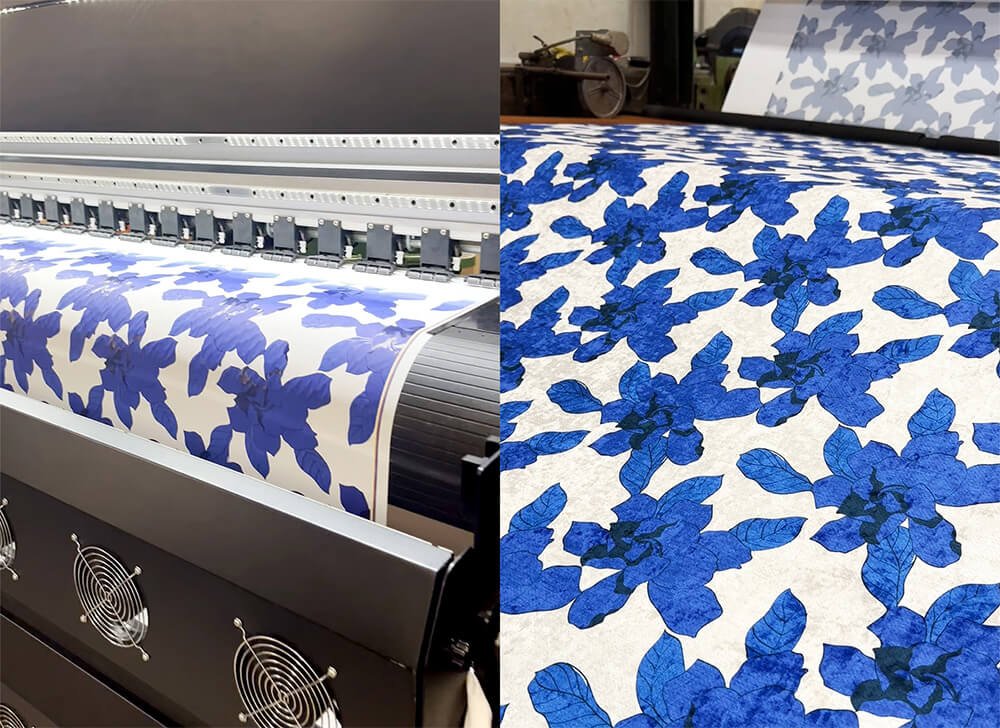
Sublimation dyes the fabric under heat, so the color becomes part of the fiber instead of sitting on top like a layer. In production, this is one reason sublimation is popular for all-over prints: you can get strong detail and vibrant color without worrying about cracking or peeling.
Pros优点
- Very vibrant, detailed prints
- Great for all-over prints
- No cracking or peeling (because it’s dye, not a layer)
Cons
- Works best on polyester, not nylon
- Color outcome depends heavily on fabric and heat settings
The tradeoff is compatibility. Sublimation works best when the fabric has enough polyester content. If your brand is committed to nylon hand-feel, you can’t assume sublimation will give the result you want.
2. Digital printing : best for nylon fabric
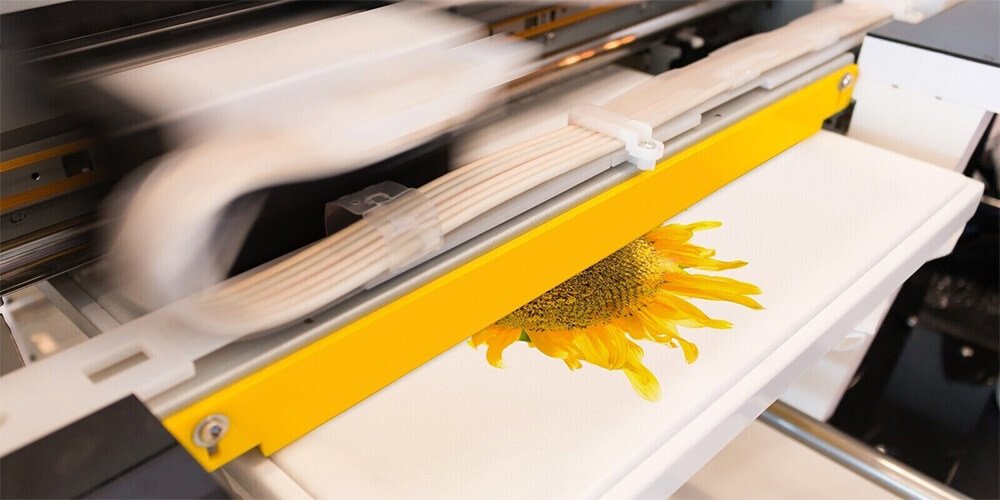
Nylon printing can produce beautiful fashion results, but it’s more sensitive to process control. Pre-treatment, curing/steaming, and finishing steps matter a lot. From a factory standpoint, nylon printing isn’t “hard,” but it’s less forgiving: the same artwork can look different across nylon bases, and durability needs to be checked carefully before bulk.
Pros优点
- Compatible with nylon fabrics
- Great for detailed artwork and softer looks
Cons
- More sensitive to process control (pre-treatment, steaming/curing, washing)
- Colorfastness needs proper testing
If you choose nylon, plan for an extra layer of testing and clearer approvals. It’s not a deal-breaker, it’s just the reality of the material.
3. Screen printing : best for logos and limited-color designs
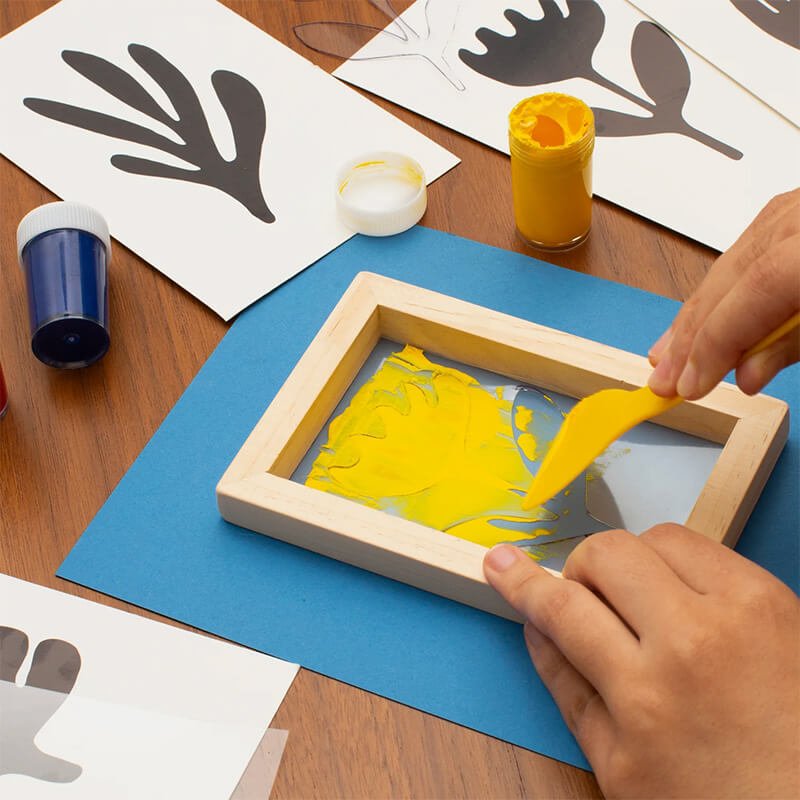
Screen printing still makes sense when the design is simple: brand marks, small placements, limited colors, and larger volumes. Once it’s dialed in, it can be consistent. But it’s not the best choice for complex gradients or photographic artwork, and hand-feel plus stretch performance depend on the ink system and curing.
Pros
- Cost-effective at higher quantities
- Good opacity for certain designs (depending on ink system)
- Consistent once dialed in
Cons
- Not ideal for gradients and complex artwork
- Ink hand-feel can be heavier
- Stretch + durability depends on ink choice and curing
Choose screen printing if your designs are simple and you want scalable cost for bulk.
4. Pad printing : best for small logos
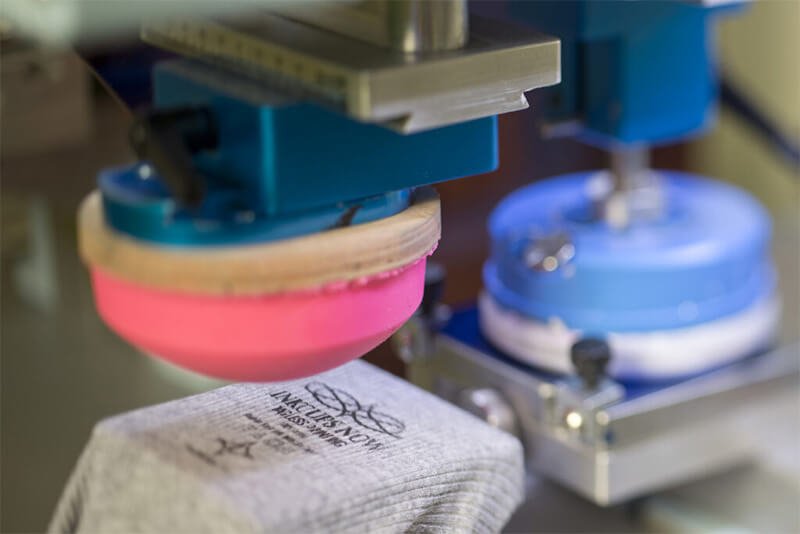
Pad printing is a transfer-based process that uses a soft silicone pad to pick up ink from an etched plate and press it onto the surface. In swimwear production, it’s most commonly used for small logos on areas like elastic bands, straps, cups, or narrow panels where other methods are either too bulky or hard to register cleanly.
pad printing is a practical option when you want a logo that looks sharp without adding a thick layer. The key is matching the ink system to the substrate so it stays flexible and doesn’t flake after repeated stretch and water exposure.
5. Heat transfer printing
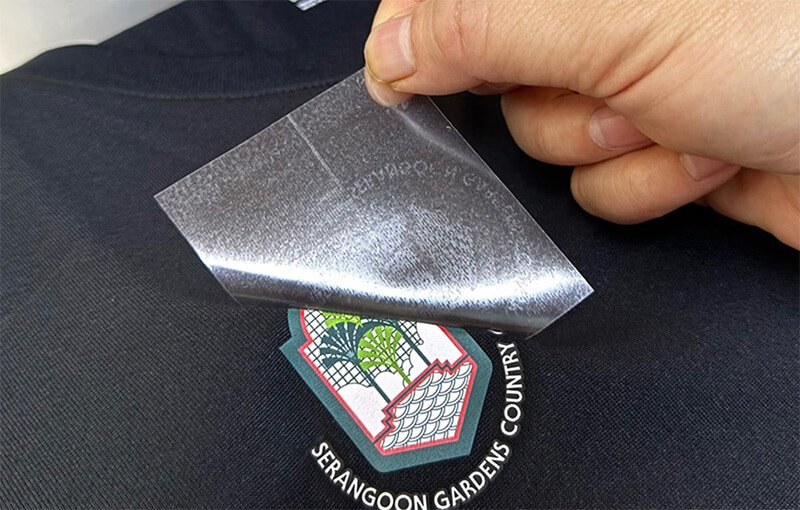
Heat transfers can be useful for tiny placements or quick experiments, but swimwear is a tough environment for anything that behaves like a film on the fabric. Stretch + water exposure + sunscreen can shorten lifespan. If transfers are part of your concept, it’s worth treating them as a “special effect” rather than the main print strategy.
Fabric choice: the decision that affects everything
New brands often ask, “Which printing method is best?” In a factory, the more useful question is, “Which fabric base do you want customers to feel, and which method is stable on that base?”
Most common swim fabrics
- Nylon/spandex: softer, premium hand-feel, often used in fashion swim
- Polyester/spandex: excellent for sublimation, great color vibrancy
- Recycled versions (e.g., recycled nylon or recycled polyester): sustainable options, but you still need method matching and testing
Practical rule
- If you want all-over, high-detail, vibrant prints, polyester-based is usually the easiest path.
- If your brand demands nylon feel, plan for nylon-compatible printing and testing.
Artwork & file setup: what your manufacturer actually needs
Most print issues don’t come from the printer. They come from unclear files and missing decisions. A manufacturer can execute fast when the artwork is production-ready, but “production-ready” usually means more than a nice-looking mockup. We need files that can be measured, repeated, and placed correctly on real pattern panels, across sizes, and with stretch in mind.
Provide these basics
- File format: AI / PDF / PSD (vector preferred for logos)
- Resolution: 300 DPI at real print size (for raster artwork)
- Color mode: CMYK or a confirmed workflow (ask your factory’s preference)
- Repeat pattern: seamless tile (if you want repeating prints)
- Design placement notes: front/back/side + size references
Beyond that, the biggest help you can give is context. If it’s an all-over print, share the intended scale (for example: “large florals” vs “micro print”) so the repeat isn’t built too small or too large. If it’s a placement print, mark a clear anchor point such as “centered to the top of the cup” or “X cm below neckline,” so the logo doesn’t drift during size grading.
Placement printing vs all-over printing (AOP)
All-over printing (AOP)

All-over prints are usually printed on fabric first, then cut and sewn. The result can be striking, but alignment across seams is not automatically “perfect,” especially at low MOQ. In production, you normally set an alignment tolerance and focus on overall visual balance rather than forcing every seam match.
Placement prints
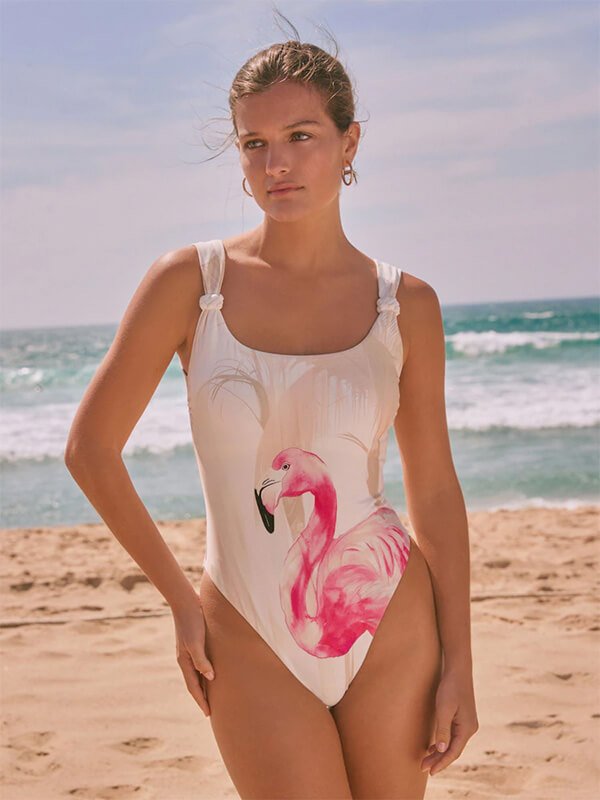
Placement prints are prints that are positioned in a specific spot on the garment, instead of a pattern that covers the whole fabric.Placement prints can look more intentional, but they require stronger pattern-panel mapping.
The same artwork can shift visually by a few centimeters depending on size grading. If you sell multiple sizes, you should decide what matters most: consistent placement relative to seams, or consistent placement relative to the wearer’s body.
There’s no right answer, but you do need an answer before bulk.
Sampling process
If you want fewer revisions, don’t start with a full garment immediately.
A clean sampling workflow usually looks like this:
- Confirm fabric + printing method
- Approve strike-off (fabric print test)
- Make sample pattern + size
- Sew sample
- Fit feedback
- Reprint (if needed)
- Final sample approval → bulk production
What is a “strike-off” and why you should insist on it?
A strike-off is a small fabric print test used to confirm:
- color direction
- clarity
- hand-feel
- potential bleeding or dullness
If timelines are tight, you can still move fast, but “fast” works best when approvals are clear and you don’t skip the early print confirmation
Quality checks for printed swimwear
When you receive a sample, try to evaluate it the way a customer will wear it. Look at the print under natural light, then stretch it gently in the areas that will stretch during wear. If the print looks dull, hazy, or overly distorted only when stretched, that’s a warning sign.
Durability is another reality check. Swimwear lives in conditions that normal fashion doesn’t. Even without lab testing, you can do basic sanity checks: rinse and dry, light rub, and visual checks for color migration or surface issues. If your market requires stricter compliance, plan for appropriate testing before you commit to volume.
Cost & MOQ: what affects swimwear printing pricing
Printing cost usually comes down to coverage, complexity, and stability. A small logo is fundamentally different from a full all-over print. Detailed artwork and strict placement requirements often add cost because they add time: more setup, more checks, more potential rework.
MOQ also ties into how printing economics work. Most methods have setup cost somewhere in the process, even if it’s not shown as a separate line item. With low MOQ, that setup is spread across fewer pieces, so your unit cost looks higher. As quantity increases, the unit cost usually comes down, and you can justify more refined controls like stricter color matching or more careful placement.
If you want a quote that’s accurate the first time, it helps to share three things up front:
- your target fabric,
- your printing style (all-over vs placement)
- what you consider “must-match” (color accuracy, seam alignment, logo position)
Those details tell the factory how much control the job requires, which is what really drives pricing.
Common mistakes new brands make (and how to avoid them)
The most common mistake is treating swimwear like a normal apparel print. In swimwear, fabric choice, print method, and construction interact. If you lock one without considering the others, you often pay for it during sampling.
Another frequent issue is expecting perfect seam matching at low MOQ while also asking for complex motifs. That expectation is possible in some cases, but it needs to be discussed early, priced accordingly, and approved with clear tolerances.
Finally, many new brands skip strike-offs to save time. In practice, a small print test often saves more time than it costs, because it prevents you from sewing a garment around a print direction you don’t actually like.
FAQs
Can you print on nylon swimwear?
Yes, but it requires the right process and testing. Nylon printing is more sensitive than polyester sublimation, so strike-offs and durability checks are important.
Will swimwear prints fade in chlorine?
They can, especially with heavy chlorine exposure. Material choice, print method, and finishing all matter. You can also educate customers on care (rinse after swimming, avoid harsh detergents).
What’s the safest printing method for all-over prints?
For many brands, sublimation on polyester-based swim fabrics is the most stable for all-over patterns, with strong color and good durability.
Do I need Pantone matching?
If color accuracy is critical (brand colors), yes, but manage expectations: stretch fabrics and printing conditions can cause small shifts. A strike-off approval is the practical standard.
Conclusion
Swimwear printing is absolutely doable for a new brand, but it works best when you treat it like a system: fabric, printing method, artwork setup, and sampling workflow all affect the final result.
If you’re preparing your first print collection, we can help you choose the right method, review your artwork, create strike-offs, and produce samples with clear approvals before bulk production. We’ll recommend the most reliable path for your fabric, MOQ, and timeline.