
Tie-side bikini bottoms have remained popular for decades, even as swimwear trends continue to change.
Their appeal is easy to understand. The side ties allow the wearer to adjust the waistband, while the exposed hip creates a light, summery silhouette. The same construction can be used for minimal string bikinis, cheeky bottoms or more covered styles.
However, adding two strings does not automatically create a better fit. The front and back pattern, tie position, fabric recovery and knot construction all affect how the bikini feels and stays in place.
A successful tie-side bottom needs to balance adjustability, coverage and security.
What Are Tie-Side Bikini Bottoms?
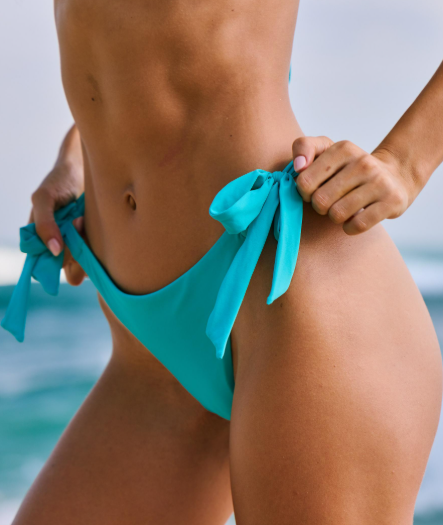
Tie-side bikini bottoms have adjustable ties on one or both sides of the hips.
Instead of using a completely fixed waistband, the front and back panels are connected by fabric strings, cords or wider sashes. The wearer can tighten or loosen these ties to change how the bottom sits around the body.
Common versions include:
- Thin string ties
- Wide fabric ties
- Double-string sides
- Ruched adjustable sides
- Ties with metal or resin ends
- Fixed sides with decorative bows
The last version is not fully adjustable. Some bikini bottoms are made with fixed side straps and bows sewn on top purely for decoration.
This distinction should be clear in product descriptions.
Why Are Tie-Side Bottoms So Popular?
A More Adjustable Waist
The main benefit is flexibility around the hips.
The wearer can loosen the ties for a more relaxed fit or tighten them to help the bottom stay in place. This makes the style more adaptable than a completely fixed waistband.
It may also accommodate small changes in body shape more easily. However, the adjustment range is not unlimited. The garment still needs the correct front and back panel dimensions.
Less Pressure at the Hips
A fixed elastic side can sometimes create a visible line across the hip, especially when the tension is too strong.
Tie sides let the wearer control that tension. When designed correctly, they can create a softer transition between the fabric and the body.
This is one reason the style is often considered flattering. The hip is not enclosed by a wide, rigid waistband.
Flexible Leg Position
The ties can usually be positioned slightly higher or lower on the hips.
Wearing them higher can create a more elongated leg line and a stronger V-shaped front. A lower position produces a more traditional low-rise bikini silhouette.
The amount of movement still depends on the front and back pattern. A bottom designed for a high-leg fit cannot always be converted into a low-rise style simply by moving the ties.
A Recognizable Summer Look
Side bows and long fabric ties add movement and visual detail without requiring complex prints or heavy decoration.
They work naturally with triangle bikini tops, halter styles and bandeaus. The ties can match the main fabric or use contrast colors, prints, beads and metal ends.
This gives designers many ways to update a familiar silhouette.
Adjustable Fit Has Limits
Tie sides mainly adjust the circumference around the hips. They do not completely change the size or coverage of the bikini bottom.
If the front panel is too narrow, loosening the sides will not provide enough front coverage. If the back panel is too small, longer ties cannot turn it into a full-coverage bottom.
The crotch width, front rise, back rise and leg opening must still fit correctly.
Side ties can improve flexibility, but they cannot correct an unsuitable base pattern.
Coverage Depends on the Pattern
Tie-side bottoms are often associated with minimal coverage, but the side construction does not determine the entire cut.
The same adjustable side can be combined with several back shapes.
Full Coverage
A wider back panel can provide more seat coverage while keeping the hips adjustable. This creates a practical option for customers who like side ties but do not want a cheeky cut.
Cheeky Coverage
Cheeky tie-side bottoms reveal part of the lower seat while maintaining more coverage than a Brazilian or thong style.
This combination is common because the adjustable sides complement the lighter, more open silhouette.
Brazilian Coverage
Brazilian bottoms usually use a narrower and more curved back panel. The center-back shape follows the body more closely and reveals more of the seat.
The side ties can help position the bottom, but the back pattern determines how much coverage it provides.
Thong Coverage
Thong tie-side bottoms use a very narrow back and are designed for minimal coverage and reduced tan lines.
Because there is less fabric to stabilize the garment, the ties and crotch construction must fit accurately.
The term “tie-side” should therefore describe the waistband construction, not the level of coverage.
Common Tie-Side Designs
Classic String Ties
This version uses narrow fabric-covered strings tied into bows at both hips.
It creates the most minimal appearance and works well with triangle tops and string bikinis. The strings should contain enough stretch to feel comfortable but enough recovery to hold the knot.
Extremely thin strings may roll, twist or press into the skin.
Wide Side Ties
Wide ties create a softer bow and make the detail more visible.
They can feel more comfortable because the pressure is distributed across a larger area. However, thick fabric can create a bulky knot, especially when the swimsuit is fully lined.
The width and length should be tested on the body rather than judged from a flat sketch.
Double-String Sides
Double strings add detail and can create a more structured look around the hips.
They may be tied together or adjusted separately. If each string moves independently, the spacing needs to remain balanced during wear.
Uneven tension can cause the front or back panel to twist.
Ruched Sides
Some designs use a cord running through a side channel. Pulling the cord gathers the fabric and changes the leg opening or side height.
This provides more styling flexibility than a simple bow, but the channel must allow the cord to move without catching.
Decorative Tie Sides
A decorative tie may be attached over a fixed side band.
This construction offers a more stable fit while preserving the appearance of a tie-side bikini. It can be useful when security is more important than full adjustability.
The product description should not claim an adjustable fit if the bow does not change the waistband.
Choosing the Right Tie Length
The ties need to be long enough to form a secure knot and balanced bow.
Short ties may be difficult to fasten, especially when the fabric becomes wet. Excessively long ties can hang awkwardly, tangle or make the design feel unfinished.
Tie length should consider:
- The intended size range
- String or sash width
- Fabric thickness
- Single or double knotting
- Desired bow size
- Decorative end pieces
The visible length after tying is more important than the flat measurement alone.
Each size should be tested rather than using exactly the same tie length across the complete range.
Fabric and Elastic Matter
Tie strings are usually made from the same fabric as the bikini, but their internal construction can vary.
Some strings contain swimwear elastic. Others rely mainly on the stretch and recovery of the fabric. Wider sashes may be made without elastic to create a softer bow.
Elasticated ties usually provide better recovery and a more secure fit. However, too much elastic tension can make a narrow string feel tight or cause it to curl.
The fabric should also recover after repeated stretching. If it becomes loose when wet, the knot may gradually lose tension.
The tie construction should be tested using the actual outer fabric and lining selected for production.
Make the Knot Secure
A side-tie bottom must remain fastened during swimming, walking and normal beach activities.
Smooth swimwear fabric can loosen more easily than textured fabric, particularly when the ties are very narrow. The design should allow enough length for a secure knot without creating an oversized bow.
A double knot provides more security, but some customers may prefer a bow that is easier to untie. This balance should be considered during development.
For more active swimwear, fixed sides or a fixed waistband with decorative ties may be safer than fully removable side knots.
Reinforce the Attachment Points
The points where the ties connect to the front and back panels receive repeated tension.
These areas may need:
- Reinforced stitching
- Bartacks
- Additional lining
- Wider seam allowance
- Enclosed seam construction
- Elastic stabilization
Without reinforcement, the fabric can stretch, wrinkle or tear near the base of the tie.
This is especially important for lightweight fabrics, narrow strings and designs with heavy decorative ends.
Adding Beads or Hardware
Metal ends, beads and logo charms can give a tie-side bikini a more premium appearance.
However, decorations add weight to the strings. Heavy ends can pull the bow downward, hit the skin or make the ties loosen during movement.
Any added component should have smooth edges and be suitable for exposure to water, salt and chlorine.
The opening must also match the finished string width. A bead that is too narrow may damage the fabric when it is threaded onto the tie.
Decorative ends should be secured so they cannot slide off or expose an unfinished string end.
Fit Across the Size Range
Adjustability can make tie-side bottoms more flexible, but normal grading is still required.
Larger sizes may need:
- Wider front and back panels
- More crotch coverage
- Longer ties
- Wider strings or sashes
- Stronger reinforcement
- More stable lining
Simply lengthening the side ties will not create an accurate larger size.
The distance between the front and back panels should also be reviewed. If the panels sit too far apart, the sides can look unfinished and expose more of the hip than intended.
For smaller sizes, excessively long ties may overwhelm the garment and create unnecessary bulk.
Are Tie-Side Bottoms Suitable for Active Swimming?
Tie-side bottoms can be worn for swimming, but they are generally better suited to casual swimming, beachwear and poolside use than intensive water activities.
The level of security depends on the knot, fabric recovery and overall fit.
For surfing, diving or beach sports, a fixed side construction usually provides greater stability. If the collection still needs the tie-side appearance, decorative bows can be added over a secure fixed band.
The product should match the activity it is designed for.
Should a Collection Include Tie-Side Bottoms?
Tie-side bottoms are a useful addition to collections built around feminine, minimal or resort-inspired swimwear.
They can also help one bikini top work with several bottom options. For example, a triangle top may be paired with a classic tie-side bottom, a cheeky fixed bottom and a high-waisted style.
This creates more choice without changing the visual direction of the collection.
Final Thoughts
Tie-side bikini bottoms remain popular because they combine adjustability with a light, recognizable summer silhouette.
The wearer can control the tension and position around the hips, while designers can combine the same side construction with full, cheeky, Brazilian or thong coverage.
But the ties are only one part of the fit. The front and back panels, crotch width, fabric recovery, reinforcement and knot construction must all work together.
If you are developing a custom swimwear collection, we can help adjust the coverage, tie construction, fabric, hardware and size grading for each bikini design. Contact us to discuss your styles, samples and production requirements.