
REPREVE fabric is increasingly used in recycled swimwear, activewear, and performance clothing. For swimwear brands, it offers a way to reduce the use of virgin polyester while maintaining many of the qualities expected from synthetic fabrics, including durability, color versatility, and quick-drying performance.
However, REPREVE is not one specific fabric. It is a branded recycled fiber that can be made into many different textile constructions. A REPREVE swimwear fabric may be soft or firm, lightweight or supportive, matte or shiny.
Whether it is suitable for a bikini or one-piece swimsuit depends on the complete fabric—not only the REPREVE name.
What Is REPREVE Fabric?
REPREVE is a branded recycled fiber produced by Unifi. It is best known for recycled polyester made from materials such as post-consumer plastic bottles, although the wider product range also includes fibers made with manufacturing and textile waste.
When a supplier refers to “REPREVE fabric,” they usually mean a finished textile containing REPREVE yarn.
For example, a swimwear fabric may contain 82% REPREVE recycled polyester and 18% elastane. Another may combine REPREVE with a different elastane percentage or with other fibers.
These materials can all contain REPREVE while offering very different stretch, weight, recovery, opacity, and surface texture.
For this reason, brands should always check the full fabric composition and specification instead of judging the material by the fiber name alone.
Is REPREVE the Same as Recycled Polyester?
REPREVE polyester is a type of recycled polyester, often called rPET. However, not all recycled polyester is REPREVE.
Recycled polyester is a broad material category produced by many suppliers. The source of the waste, recycling method, consistency, quality control, and traceability can vary.
REPREVE is a branded option within this category. One of its main differences is its traceability system, which is designed to verify the presence of REPREVE fibers within yarns, fabrics, and finished products.
How Is REPREVE Fabric Made?
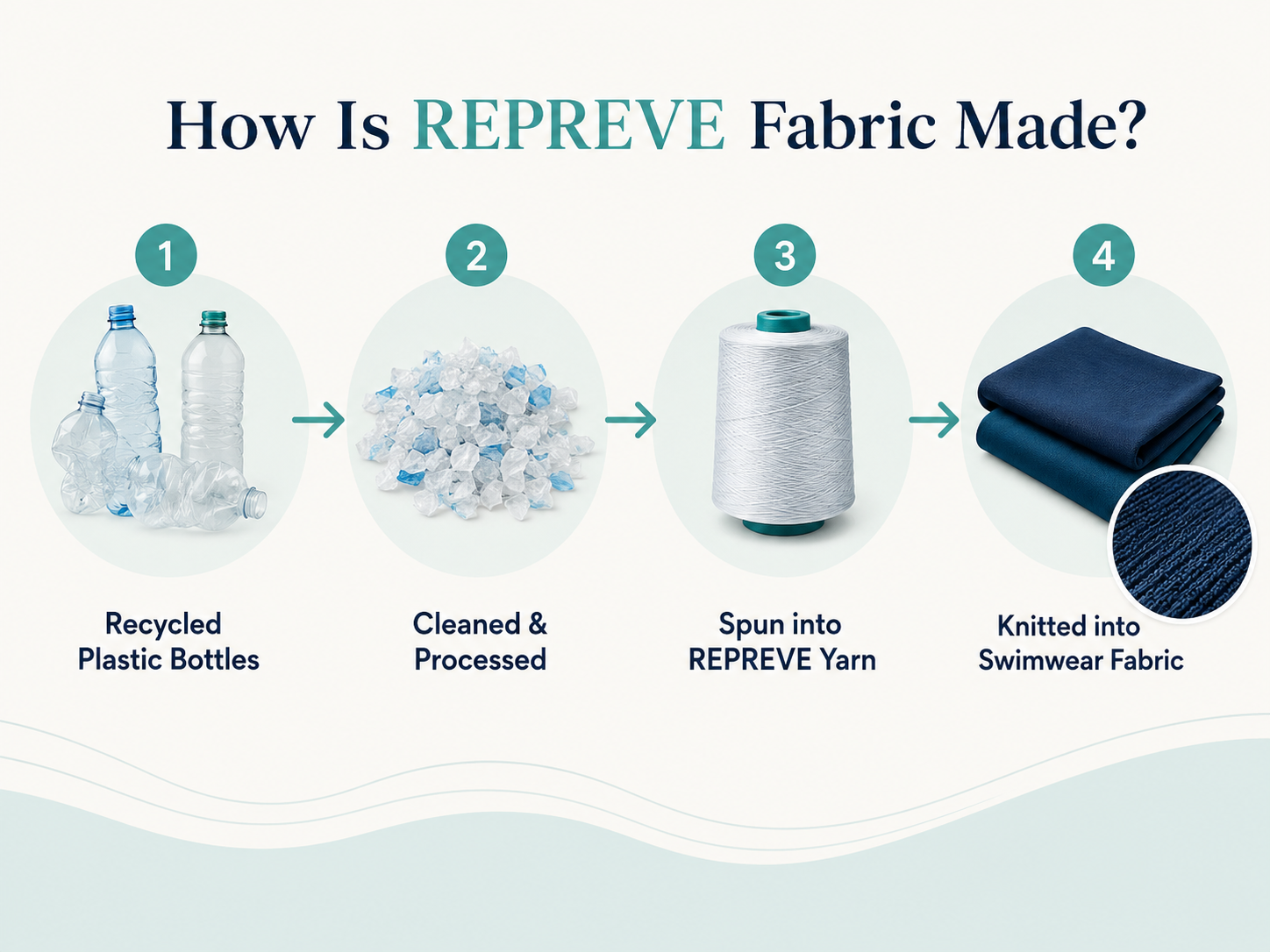
The production process begins with approved polyester waste, commonly including used plastic bottles.
The material is sorted and cleaned before being processed into small flakes. These flakes are converted into recycled polyester resin, which can then be melted and spun into yarn.
Textile mills use the yarn to knit or weave different fabrics. For fitted swimwear, REPREVE polyester is usually blended with elastane to provide the stretch needed around the bust, waist, hips, and leg openings.
The finished fabric may then be dyed, printed, textured, or treated with additional finishes.
This distinction is important: REPREVE provides the recycled fiber, but the textile mill determines how that fiber becomes a usable swimwear fabric.
Is REPREVE Suitable for Swimwear?
Yes, REPREVE can be suitable for bikinis, one-piece swimsuits, rash guards, and other swimwear styles.
It can provide many of the familiar qualities associated with polyester, such as good color reproduction, shape stability, fast drying, and compatibility with different printing methods.
Still, not every REPREVE fabric is automatically suitable for every swimsuit.
A fashion bikini worn mainly at the beach may need softness, comfortable stretch, and an attractive surface finish. A training swimsuit used several times a week requires stronger recovery, chlorine resistance, and long-term stability.
The intended use should guide the fabric choice.
Stretch and Recovery
Most fitted swimwear needs elastane because recycled polyester alone does not provide enough stretch for a close body fit.
The elastane percentage often falls within a similar range to conventional swimwear fabrics, but the percentage does not tell the whole story. Knitting structure, fabric weight, and finishing also affect how the material stretches.
Recovery is just as important as stretch. A fabric may feel flexible during the first fitting but loosen around the waist or leg openings after repeated use if it does not return properly to its original shape.
The material should therefore be tested through movement and repeated stretching rather than approved only by hand feel.
Chlorine Resistance
Polyester is often selected for pool-oriented swimwear, but the REPREVE name alone does not guarantee chlorine resistance.
The finished fabric also contains elastane, dyes, and finishes that may react differently to pool chemicals. Conventional elastane can gradually weaken after repeated chlorine exposure, even when the polyester component remains stable.
For occasional resort use, standard performance may be sufficient. For training or frequent pool use, brands should request chlorine testing on the finished fabric.
Color and Printing
REPREVE polyester can work well for both solid colors and printed swimwear. It is particularly useful for collections that use sublimation printing, which is commonly applied to polyester fabrics.
However, color performance still depends on the dye or ink, heat setting, fabric construction, and finishing process.
Bright shades, neon colors, and dark colors should be checked for lightfastness, chlorine resistance, and color transfer. Recycled content does not remove the need for normal color testing.
Opacity and Hand Feel
Opacity is especially important in light-colored swimwear. A fabric may look completely opaque on a table but become transparent when stretched or wet.
White, beige, pastel, and neon REPREVE fabrics may require lining or a denser construction.
The hand feel can also vary significantly. Some materials feel smooth and soft, while others are firmer and more suitable for shaping or compression. The right choice depends on the style, price point, and customer expectations.
What Are the Benefits of REPREVE Swimwear?
The main advantage is the ability to use recycled polyester without moving away from the performance and design flexibility expected from synthetic swimwear.
Lower Use of Virgin Polyester
REPREVE helps reduce demand for newly produced polyester by using existing waste as a raw material.
This does not mean the fabric has no environmental impact. Energy, water, chemicals, dyeing, garment production, and transportation are still part of the supply chain.
A more accurate claim is that the material contains recycled polyester and reduces reliance on virgin feedstock.
Better Material Traceability
Traceability is an important reason some brands choose REPREVE instead of unidentified recycled polyester.
Its verification system can help brands confirm that the selected yarn or fabric contains the branded recycled fiber. This may support internal sourcing requirements, wholesale documentation, and more specific product descriptions.
Flexible Design Options
REPREVE yarn can be made into smooth, ribbed, textured, shiny, matte, printed, and supportive fabrics.
This means using recycled polyester does not require every collection to have the same technical or athletic appearance.
A brand can use it for a minimal fashion bikini, a colorful printed collection, or a more structured performance swimsuit—provided the correct fabric is selected.
What Are Its Main Limitations?
REPREVE should not be treated as a complete sustainability or performance guarantee.
The fiber name does not tell a buyer how much recycled content is in the final fabric, whether the elastane is recycled, or how the material will behave in chlorine and sunlight.
REPREVE polyester is also still synthetic. It is not biodegradable, and it may release synthetic microfibers during washing like other polyester textiles.
Another limitation is end-of-life recycling. Swimwear often combines polyester with elastane, lining, elastic, thread, foam cups, and hardware. These mixed materials can make the finished garment difficult to recycle again.
REPREVE vs. Conventional Polyester
The main difference between REPREVE and virgin polyester is the source of the raw material.
| Factor | REPREVE Polyester | Virgin Polyester |
|---|---|---|
| Raw material | Recycled polyester waste | Newly produced petrochemical material |
| Traceability | Available through the REPREVE system | Depends on the supplier |
| Stretch | Usually provided by elastane and fabric construction | Usually provided by elastane and fabric construction |
| Color options | Suitable for solid colors and prints | Suitable for solid colors and prints |
| Chlorine resistance | Depends on the finished fabric | Depends on the finished fabric |
| Hand feel | Depends on yarn and construction | Depends on yarn and construction |
| End-of-life recycling | Difficult when blended with other materials | Difficult when blended with other materials |
From a design perspective, both materials can produce similar-looking swimwear.
The choice usually comes down to recycled-content goals, traceability, fabric availability, cost, and whether the final material meets the required performance standard.
Frequently Asked Questions
Is REPREVE fabric good for bikinis?
Yes. REPREVE polyester can be blended with elastane to create stretch fabrics suitable for bikini tops and bottoms. The fabric should still be checked for recovery, opacity, softness, and color performance.
Is REPREVE fabric 100% recycled?
Not necessarily. The REPREVE fiber is recycled, but the finished fabric may also contain elastane or other fibers. The exact recycled percentage should be listed in the fabric specification.
Is REPREVE chlorine resistant?
Not automatically. Chlorine resistance depends on the complete fabric, including the polyester, elastane, dyes, knitting structure, and finishing.
Final Thought
REPREVE can be a practical choice for brands developing recycled polyester swimwear. It offers traceable recycled content while supporting many of the colors, prints, textures, and performance features expected from modern synthetic fabrics.
The important point is that REPREVE is a fiber source, not a guarantee that every fabric will perform in the same way.
For custom swimwear development, we can help compare recycled fabric options, create samples, and evaluate materials before bulk production. Contact us to discuss your collection requirements.