
A manufacturer offers a swimwear MOQ of 50 pieces. You plan two bikini styles, three colors and four sizes. Does that mean 50 pieces for the whole collection, 50 for each style, or 50 for every color?
That distinction changes your order size before you have sold a single swimsuit. Before comparing low MOQ swimwear manufacturers, ask what their minimum actually counts.
What does a swimwear MOQ cover?
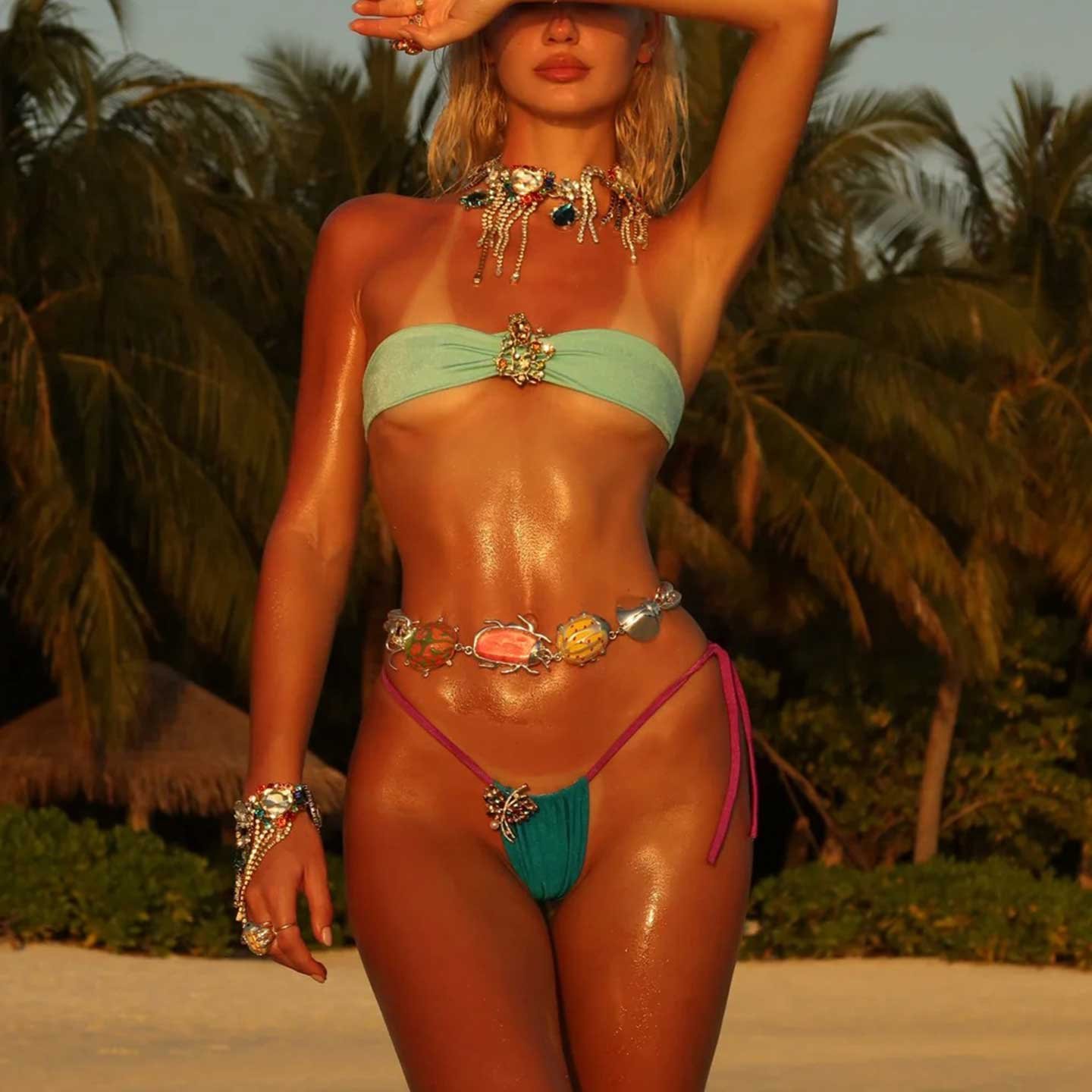
MOQ means minimum order quantity, but the number needs a unit. A useful quotation should distinguish these four things:
- Style: A particular design, such as a triangle bikini top or a one-piece swimsuit. Ask whether changes to straps, coverage or construction create a separate style.
- Color or print: A style offered in black and a floral print may have separate minimums. Do not assume the style quantity can be divided freely.
- Size: Ask whether sizes can be mixed within the agreed quantity and whether individual sizes have minimums.
- Piece or set: For bikinis, confirm whether a top and bottom count as two garments or one set.
At Joy Bikini, our starting MOQ is 50 pieces per style. Before placing an order, confirm how that applies to your selected colors, sizes and bikini combinations. A starting minimum does not answer every detail of an assortment.
A simple order-planning example
Suppose you want one one-piece design in two colors, with a total of 50 garments. Here are two possible interpretations:
| Quotation basis | Quantity required |
|---|---|
| 50 per style, with a two-color split allowed | 50 garments in total |
| 50 per style per color | 100 garments in total |
This is an illustrative example, not a Joy Bikini quotation. Ask the supplier to write the approved color and size breakdown into the quote. “50 pieces minimum” alone leaves too much room for misunderstanding.
Why a fabric choice can affect a small order
The garment order and the material order are separate questions. A fabric supplier may have its own minimum for a custom color, print or finish. Custom hardware and branded packaging can also introduce additional minimums.
For a first collection, ask which swimwear fabrics and colors are available for your planned quantity. If a custom material requires more than the garments will use, clarify who pays for the balance, who owns it and whether it can be kept for a reorder.
Plan the size split before approving the order
Dividing a small order across many options leaves fewer units in each size and color. For example, 50 garments spread evenly across two colors and five sizes gives just five units per combination. That is arithmetic, not a recommended buying ratio.
Choose your split using evidence from your audience, such as previous sales or preorders. If you have no sales history, keep the launch assortment manageable rather than presenting an assumed size ratio as proven demand.
For bikinis sold as separates, plan top and bottom quantities independently. Customers may need different sizes, so matching quantities are a commercial choice to discuss, not an automatic requirement.
Five questions to send with your enquiry
- Is the minimum per style, per color, per garment or per bikini set?
- Which color and size splits are allowed?
- Do the chosen fabrics, prints, labels or trims have separate minimums?
- Are there additional charges for this quantity, and what does the quoted price include?
- What minimum and material availability would apply to a repeat order?
A useful enquiry includes sketches or references, proposed quantities and your intended launch date. Once those details are clear, it is easier to assess whether the order fits your budget.
Planning a small custom collection? Send Joy Bikini your style references and proposed color and size breakdown so we can confirm the applicable minimums before you commit.